
Sunday, January 5, 2014


Wednesday, January 1, 2014
Wednesday, August 7, 2013
Happy Birthday The Blood Countess: Erzsebet Báthory (1560-1614)

Countess Báthory
is said to have bathed in the blood of 650 young girls, all of whom she tortured, murdered
and drained their bodies of blood to retain her youth.
Reputed to be a vampire, a lesbian and a witch, her story inspired the Brothers
Grimm, Bram Stoker, and Gothic horror fans for the past four hundred years. Legend
has it she was the most prolific serial killer in history.
On August 7th,
1560, the daughter of Baron George Báthory and Baroness Anna Báthory was born.
They named her Erzsebet (anglicized name is Elizabeth Hungary
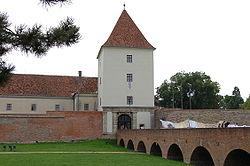
At the age of eleven, she
was engaged to František (Ferenc) Nádasdy who was a nobleman and captain of the
Hungarian army, and moved to Sárvár and Kereszstúr castles to live with her mother-in-law until her marriage.

In 1575, she
married Ferenc. As a wedding gift, he bought her Čachtice Castle in western Slovakia. Often times her husband -- chief commander of the Hungarian troops in the war against the Turks -- was gone for long
periods of time. It was said he was feared and that he danced with the dead bodies of Turk
soldiers, throwing their decapitated heads up in the air after battle. He taught
Erzsebet new ways to reprimand servant girls -- pour honey over their bodies
and leave them outside for the insects to creep all over and wasps to sting them. He also left her with iron torturing devises he used in battle to exercise on
her servants.
While her husband
was gone, Erzsebet managed the affairs of the Castle. It was here that Erzsebet
In 1604, her husband died. Records show more and more young peasant girls went to work in the castle were disappearing. She was extraordinarily powerful. She became more sadistic. She had no supervision. She was isolated. Her mental state was rapidly deteriorating. Erzsebet was now 43 and her angelic complexion had faded. This, it was said, put her into a
tempestuous rage. One night, a maidservant combing her hair, pulled out some strands.
Enraged, Erzsebet hit her in the face, blood splattered all over her arm. Wiping it away, she noticed how soft and smooth her skin was. She consulted with alchemists and they too agreed
blood was an elixir of youth. If nature was going to steal her youth, she would
take it back from the young.
Legend says that Erzsebet began capturing and torturing young girls -- particularly virgins between the ages of
10-14. She lured girls to work for her and ordered her servants to nab girls off the streets from surrounding villages and lock them in the dungeon. There, she attacked them with knives, burned their private parts with a hot iron, and stuck pins underneath their
fingernails before cutting off the digits of those who resisted. She cut areas of flesh from their bodies and forced them to eat it. Shoved in small cages and slowly impaled with spikes. Some, it was said, were hung upside-down by
chains round their ankles, naked and still alive. Their throats slit and blood
drained for Erzsebet
Erzsebet eventually became careless moving
to the nobility for her victims. Four drained bodies were thrown from the walls
of the castle. Peasant girls were one thing, but noble girls were vastly different. Church records show an inordinate amount of deaths of young girls. Word reached Matthias II. And in 1610, an investigation was launched. Troops were sent, dead and mutilated tortured bodies were found strewn about the castle. An official inquiry of 300 witness statements were taken. Her aristocratic status meant she could not be arrested and executed. Her maidservants and accomplices were not so lucky. They had all their fingers pulled out by red-hot pincers, they were tortured and their bodies thrown alive into a fire.

She was
never convicted of any crime. But to remove her from power, she was walled up within her bed chamber with
only small slits for ventilation; and occasionally the passage of food.
After
three years, a guard looking through one of the slots saw the Blood
Countess lying face down on the floor of her chamber, dead. Erzsebet died in Čachtice Castle on August 21, 1614.
This is a result
of the legend created about the life of Countess Báthory. We don't know for
sure. Documents about her life disappeared. Was she a sadistic murderer? Or was this a plot to remove a women from power. Women in early 17th-century Hungary

Considering the Countess was an unfavorable Protestant born into one of the most important and wealthiest noble families in central Europe, a woman managing ten very valuable castles estates on
her own, and that the king owed her late husband a large sum of money, there was motivation to quickly remove her.
Like other
legends, the tales of the Blood Countess were shrouded with rumors. Many books
and films were made of her life. Whether these stories are true or not, their
appeal to a certain kind of audience remains as strong as ever.

Monday, August 5, 2013
Happy Birthday Irene Rice Pereira (1902-1971)
Born on August 5th in Massachusetts, Pereira was influenced by her mother, an amateur artist and enrolled in 1927 at the Art Students League in night art classes. In 1931, she traveled to Europe and North Africa to further her painting studies. In the mid-1930s she studied with Hans Hofmann, and became one of the founders and first instructors at the Design Laboratory.
Known for her work in the Geometric abstraction, Abstract expressionist, Lyrical Abstraction genres and her use of the principles of the Bauhaus school, Pereira's works are displayed at the National Gallery of Art, Smithsonian Institution, Hirshhorn Museum, Brooklyn Museum, Boca Raton Museum of Art, Phillips Collection, and the University of Iowa Museum of Art.
She married her first husband, Umberto Pereira, at twenty-one, her second, George Wellington Brown, an engineer, at forty, followed by her third, the Irish poet George Reavey and divorced him seven years later. She used the professional name I. Rice Pereira to avoid discrimination against female artists. Her work reflects her interest in light, space, and mysticism. She began experimenting with various nontraditional materials in the late 1930s, painting on plastic and glass, and adding such substances as marble dust to her pigments. Some critics called her work ethereal.
Known for her work in the Geometric abstraction, Abstract expressionist, Lyrical Abstraction genres and her use of the principles of the Bauhaus school, Pereira's works are displayed at the National Gallery of Art, Smithsonian Institution, Hirshhorn Museum, Brooklyn Museum, Boca Raton Museum of Art, Phillips Collection, and the University of Iowa Museum of Art.
She married her first husband, Umberto Pereira, at twenty-one, her second, George Wellington Brown, an engineer, at forty, followed by her third, the Irish poet George Reavey and divorced him seven years later. She used the professional name I. Rice Pereira to avoid discrimination against female artists. Her work reflects her interest in light, space, and mysticism. She began experimenting with various nontraditional materials in the late 1930s, painting on plastic and glass, and adding such substances as marble dust to her pigments. Some critics called her work ethereal.
Wednesday, June 26, 2013
Happy Birthday The Silver Lady: Belle Kogan (1902-2000)

Born on June 26th in Ilyashevka, Russia, Belle Kogan emigrated to the US with her family in 1906. She studied mechanical drawing, then taught it soon after graduating high school. She saved money to attend Pratt Institute in Brooklyn, but had to drop out in 1920 to work in her father’s jewelry store. He wanted her to get married, but she told him: "Well, I’m going to have a career, goodbye . . . I am never going to get married and I’m never going to have children. I had a family all my life I helped raise. I helped you in business. I want a life of my own." *
And she did. In 1929, Quaker Silver Company in Attleboro, Massachusetts, hired her to design pewter and silver items. They even paid her tuition to take a course at New York University in the summer of that year.
In 1931 Kogan opened her first studio in New York City: Belle Kogan and Associates (BKA). She was one of the first industrial designers -- and one of the first female industrial designers -- in America to experiment with plastics designing Bakelite jewelry, celluloid vanity items and clocks.
Remarkably, by 1935, she had an impressive client list, including Warren Telecon Company, Celluloid Corporation, Bakelite Corpotation, Federal Glass Company, Red Wing Potteries, Bausch & Lomb, Dow Chemical, Haviland China, Zippo... By 1939 she had a staff of three women designers. It wasn't easy. She faced a lot of opposition in a male-dominated field. In a 1939 interview she stated that, “Manufacturers were quite antagonistic when a woman came around proposing new ideas – they didn't think a woman knew enough about the mechanical aspects of the situation. I had to prove I had a practical mind.” **
She wrote numerous articles on silver for trade journals and designed for a number of silver companies -- Tiffany & Company, Towle and Samuel Kirk & Sons.

Silver Plated Meat Dish, 1936, Reed & Barton
Offered by Heritage Auctions, Dallas, Texas, on June 13, 2012

Silver Plated Double Vegetable Dish, 1936, Reed & Barton
Dallas Museum of Art, The Jewel Stern American Silver Collection
In 1972 she left the studio to work as a consultant.
* (see Pat Kirkham’s book, Women Designers in the USA, 1900-2000: Diversity and Difference; and Modernism in American Silver by Jewel Stern)
Wednesday, May 22, 2013
Monday, January 28, 2013
Agnes Sampson, d. January 28, 1591

Agnes Sampson was a Scottish healer and midwife known as the "wise wife of Keith." After James VI married Anne of Denmark and returned from Oslo, he brought with him the fear of black arts. Agnes was accused and 55 charges were made against her: raising the devil in the form of a black dog, digging up bones to make magic witchcraft powder, and commanding the devil to destroy one of James' ships.
Interrogated by the king himself, she was deprived of sleep, subjected to barbaric torture for days and under extreme duress she confessed. She was found guilty at her trial stripped, shaved and strangled. Then burned at the stake on January 28, 1591 at Castle Hill, Edinburgh. The naked ghost of Agnes is said to roam Holyrood Palace.
Sunday, January 20, 2013

Thursday, October 4, 2012
Happy (possible) Birthday Bess of Hardwick (1527-1607)

I assure You, there is No Lady in this Land that I better Love and Like.
said Queen Elizabeth I about Bess of Hardwick. The formidable and fashionable Elizabeth Countess of Shrewsbury. Bess of Hardwick, as she is known, was one of the best-connected -- and richest woman -- in Britain after the queen.
Married four times, she survived all her husbands and then returned to her family estate where she built two large houses... one for herself and a second for servants and visiting guests.

On October 4, 1597, Elizabeth Countess of Shrewsbury moved into her new house at Hardwick in Derbyshire. Construction began in 1590. It was the grand product of her collaboration with the famed Elizabethan architect Robert Smythson. This day is thought to have been Bess's 70th birthday*, also the day she chose to move into the unfinished grand house.
The house placed at the top of a steep hill with its tall window-filled towers revealed views for many miles of the surrounding countryside.
Hardwick reveals Bess's desire for personal expression -- Elizabethan courtly ritual and domestic custom are married with Smythson's architectural formalism and design.

Smythson and Bess thought about each season of the year from the lengthy warm days of summer to the dark and cold depths of winter. Smythson brilliantly managed how daylight would filter into Bess's environment. Alternating warm sunshine through the windows and the structurally sound piers.

The earliest galleries were designed to be protected corridors leading from one great room to another. But during the Elizabethan time they acquired another important function as a place for indoor exercise. Sixteenth-century doctors stressed the importance of daily walks and long galleries allowed for this when weather outside was frightening.
During the bitterly cold winters of this unusual Little Ice Age, there were fixed lights on the walls and large copper candlesticks as well as other candlesticks of various materials and sizes giving night time illumination to the magnificent house.

Bess also owned coal mines. Almost every room has a fireplace. 28 of them.

Bess wanted in her floor plan a grand processional route through the hall, up a dramatic and romantic stone staircase and into the High Great Chamber, the ceremonial center of her house.

The great chamber is Flooded light illuminates the rich decoration of tapestry covered walls and plaster relief friezes. Here the story of Diana depicted in relief running around the room symbolized Bess loyalty waiting for that royal visit from the queen, her friend.

As she waited, perhaps, she gazed upon the portraits of her former husbands and wondered without their powerful connections and immense wealth she could have never risen from an obscure daughter of an indigent squire to a grand countess and lady-in-waiting to the queen.
Though the queen never came, Hardwick Hall was the zenith of Bess's vision. A lasting triumph to us today.
* See Mary Lovell's Bess of Hardwick: Empire Builder.
The Long Gallery at Hardwick Hall, Derbyshire, with the canopy supplied by Francis Lapierre.
All images from Country Life.
Thursday, June 14, 2012
Happy Birthday Margaret Bourke-White (1904 - 1971)

An American photographer and documentary photojournalist, she was one of the first original staff photographers at Time, Life and Fortune magazines. Noted for her coverage of WWII with ferocious visual intensity.
Bourke-White was the first female photographer to serve with the US armed forces. And the first Western photographer allowed into the Soviet Union in 1930.
But it was her photographs of the the rural South during the Depression that we seem to remember the most.
She died of Parkinson's disease -- more people are diagnosed each year in alarming numbers.
Wednesday, May 23, 2012
Highest Price Paid for a Camera to date
An 89-year-old Leica camera recently sold at Galerie Westlicht in Vienna, Austria for nearly $2.8 million. The anonymous bidder not only has one of 12 surviving models of the legendary 0-Series, but an important piece of women's history. 25 test models were originally made in 1923 as prototypes for the compact and durable Leica A which made its debut to the public the following year. But this prototype was more than just a camera. It served a symbol for the profound change women underwent in the 20th century.


The camera, once a complex, cumbersome instrument now became available to everyone. It was affordable. When it became apparent that the camera could record any kind of situation and experience -- that it was the source of an instant form of immortality -- everyone wanted one. It wasn’t just men but women who took up the camera and began recording images of their ordinary lives. These cameras were hand-held and fast-action and could capture a fleeting moment in time under a low light -- an expression, a gesture, a mood, a posture.
This camera was emblematic of widespread social changes. And photography was the field where these changes were most evident. Using their own cameras, women created their own portraits and self-portraits. More and more women altered the rules by which they had traditionally been regarded to terms they could understand and control. Interestingly enough.... the traditional male images of women began to correspondingly change.
Leica 0 series, number 116. Photo by Leonhard Foeger for Reuters.
Tuesday, May 8, 2012
Maurice Sendak

Your characters have been called snaggletoothed and grotesque, which raised concerns from the sterile masses.
What many critics failed to see was the beauty and fantasy of your creatures and their stories.
I would sit alone in my room as a child studying your drawings and words and not feel so isolated.
"I refuse to lie to children.
I refuse to cater to the bullshit of innocence."
~ Maurice Sendak

RIP Maurice Sendak, you opened up my world as a child reading about Max and Jennie as an adult.
Monday, April 30, 2012
Zaha Hadid's Liquid Glacial

Zaha Hadid whose signature language is curvilinear forms and dynamic movement frozen in time reminiscent of Umberto Boccioni has created a new item of furniture: Liquid Glacial
The clear acrylic table seems to be caught in the moment of transition -- as ice melting into water spinning at a high speed.
The tabletop is smooth and flat, as the legs flow downwards in rippling patterns.
Tuesday, April 24, 2012
Desire of the Day: Linda Steen and Lena Axelsson's Spinnaker Chair

I've been thinking about packing it up and moving to the beach a LOT lately with my husband and two terriers in tow. My husband has a small sail boat. It is nice to sit quietly on his boat and watch him steer the waters with his Popeye arms. I close my eyes and pretend we are somewhere else -- the clear blue waters of the Caribbean or even the deep and dark waters of a Scottish loch. These brown lakes in Missouri


You can customize it to your liking by choosing from a variety of colors of leather or canvas cushions. The backing? Recycled old sails.

The spring steel frame is powder varnished which comes in black, steel grey or white. The frame has a slight curve at the front rail preventing the constriction of blood circulation the legs. A great idea as I sit here typing this post shaking my feet awake in my most uncomfortable desk chair. It also has a loaded tilt function which can be locked into three different positions to recline. The canvas or leather is stretched over three carbon ribs by comfortable foam cushions (not like those old foam seats which have hardened after 50 years). And, the best part, it swivels 360 degrees.

I will never tire of a swivel chair. I used to make myself sick as a child spinning around and around in my grandfather’s living room chair until I was scolded to stop.
The chair also comes with an optional foot stool.

What I like the most is that the design of the chair was collaborated by two WOMEN. Linda Steen (left) who established Studio Scenario in 1985, which is now one of the largest interior design company in Norway. And Lena Axelsson who just turning 40 has quite an impressive design resume.
Tuesday, April 10, 2012
Women in Design: Lucie Rie (1902-1995)

In 1995, Lucie Rie's death at the age of 93 brought an end to the long and productive life of one of the leading studio potters of the 20th century. In many ways, it also marked the end of an era for the craft itself.
Born in Vienna in 1902, Lucie Rie (née Gomperz) was the third and youngest child of a prosperous ear, nose and throat doctor who possessed progressive artistic taste -- his surgery and waiting-room was designed in the latest Viennese Modernism style. Gisela, her mother, family’s fortune was in the wine business. She divided her time between her family’s city and country home and watched her father play chess with Sigmund Freud.
Artistically inclined but uncertain of her path, Rie enrolled at the Vienna Kunstgewerberschule in 1922. She studied under Michael Powolney who was more of a modeler than a potter with an old-fashioned eye. Under him, she learned to throw, a technique she continued to use all her life.
Her work was hugely influenced by pared-down and functional forms advocated by Josef Hoffman. Adapting Hoffmann's credo, she made earthenware pots, tall cylinders, rounded bowls, and tea-sets that were sparse in form and often with fine rims and thick handles.
 |
| Rare "Vienna Period" vase, circa 1935 She signed her works Lucie Rie Gomperz during this time Phillips de Pury & Company, June 12th, 2008 |
An ancient technique, raw glazing became a signature feature of her work. Whether decorative or functional, she always thought of her work to integrate with the domestic interior.
With Hoffman's help, she held her first exhibition in 1923 at Hoffman's Palais Stoclet in Brussels. And two years later participated in the Exposition Universelle in Paris. In 1926, she married Hans Rie (1901-1985), an easy-going young businessman who worked in the Bruder Bohm hat factory. They had little in common except for a fondness for skiing. Rie turned to her work.
 |
| Lucie Gomperz and Hans Rie on a skiing trip, 1925 |
He thought her pots were too thin and her turning too fussy. but her own work remained severe and urban. Rie rooted her works and ideas in the Modern Movement. Still, they remained life-long friends.
 |
| ‘I am a potter, but he was an artist’ Lucie Rie said while being interviewed by The Guardian in 1988. |
 |
| Tablewares by Lucie Rie and Hans Coper, c.1955 Porcelain with manganese slip and sgraffito decoration |
Rie’s and Coper’s personal styles started to diverge: hers remained functional, his became sculptural. Eventually, in 1958, Coper decided to set up his own studio and teach extensively.
From 1860 to 1972 she taught part time at the Camberwell School of Art where she was known to be a bit rigorous and unsympathetic to her students -- her demeanor somewhat steely, though pleasant. Always elegant, it was said that she stepped off her wheel after throwing as clean and spotless as when she went on.
 |
| Porcelain Cylindrical vase with flaring neck, c. 1976 Phillips de Pury & Company, September 27, 2011 |

In 1981 she was advanced CBE and continued to exhibit and work throughout the decade, but after a series of strokes in the early 1990s she had to stop. In 1991 she was made Dame. She died in her home on April 1, 1995.
 |
| Victoria and Albert Museum |
Quietly spoken, she would politely show visitors around her studio and offer them strong coffee or tea and home-made chocolate cake . She possessed a clear understanding of her materials and control of form. She was one of the most creative studio potters of the twentieth century.
top image: Lucie Rie 1987 at her front door Jim Hair ; all other images with the exception of Phillips &de Pury from The Lucie Rie Archive at the Craft Studies Center.
Wednesday, March 28, 2012
Charlotte Perriand Wins

By the 20th century, major institutional obstacles began to disappear, allowing women to formally train in art, architecture and design. Women enrolled in these schools in droves. At the same time that Modernism was developing, it was also becoming marginalized. As critics and scholars began to define Modernism, the work of women designers was left off the pages.
Women created great original works of quality design, and in significant amounts. They acquired professional skills which they exhibited in public venues, and began to relentlessly pursue active careers. They created a diverse range of style and ground-breaking designs, and many of their names still in the 21st century are obscured by the shadows of men.
In February, a Paris court issued a decision in favor of the daughter of Charlotte Perriand. Perriand wasn't given proper authorship of three of her designs; instead, the works were attributed to her sometime male collaborator Jean Prouvé. Pernette Martin-Barsac, Perriand's daughter, fought against the Sonnabend Gallery for misattribution and won. She had been fighting this for a decade (or more) even when the Pompidou Center hosted a retrospective of Perriand's work in 2005. When these three designs went to auction, Prouvé was credited as the designer.
Perriand dealt with this during her lifetime. In the 1950s the Tunisia bookshelves was launched on the market under the label of "Jean Prouvé Studios."
 |
| Tunisian Bookshelf, pic from MoMa |
Information gets regurgitated over and over, with assumption and bias. Lately we have come to care more about the look of a design over who designed it and how it fits in. We have a unique opportunity to study the range of activity and information about women designers.
 |
| Perriand's floor plan for a student room in the dormitory building, Maison de la Tunisie, at the Cité Internationale Universitaire de Paris |
 |
| Student Room, Maison de la Tunisie, 1952 Perriand was put in charge of a group that was to design and furnish 40 student rooms. Both images above from Mary McLeod's (editor) Charlotte Perriand: An Art of Living, 2003. |
Tuesday, March 20, 2012
Acclaim to the Women's Clubs

In 1859, Constance Fauntleroy Runcie (1836-1911) founded the first women's social club east of the Mississippi in New Harmony, Indiana. She called it The Minerva Society.
She moved to the city of St. Joseph, Missouri in 1871 with her Episcopal minister husband James Runcie. A lot of things were happening around this time in St. Joe. The railroad reached the town in 1859 where it served as a supplier and distribution point to the entire western half of the country. St. Joe is known for a lot of things -- John Patee opened his luxurious four-story brick hotel just a year earlier where Oscar Wilde later stayed, the Pony Express in 1860 and 61, Sanborn Fire Insurance Map Company established in 1867, and the death of Jesse James in 1882.
 |
| The Patee House |
Can the decrease of interest and value of domestic objects
be linked to a deeper and more profound change
in how we regard the role of the housewife today?
There are still a number of far-sighted women who over a century later realize that education and civic involvement are essential elements in building a stable community. Although women have made great advancements in the professional world since that time, we still can learn a thing or two from Women's Clubs of the nineteenth century: we still need to open opportunities for women and develop support systems for each other.
 |
| St. Joe today |
(images from Missouri Western University's digital archives and stjoemo.com)
Monday, March 12, 2012
Women in Design:: Azadeh Shladovsky
I love seeing the success of well-trained designers. My fellow alumni, (UCLA’s architecture and interior design program), Azadeh Shladovsky has been building a practice for seven years.
A great design talent and founder of her own multidisciplinary firm, she premiered her collection of nature-inspired furniture at Jean de Merry.
She marries wood, metal and fur in a non-formulaic manner.
 |
| Petit Chene Side Table |
 |
| Diva Stool |
She uses the principles of proportion, scale, balance and color -- something, i feel, a lot of furniture forms are lacking today.

 |
| Torre Stool |
A tension of contrasts: soft v. hard, lustrous v. matte, sinuous v. linear
 |
| Infinity+++ Bench |

All images from Azadeh Shladovsky
Subscribe to:
Posts (Atom)